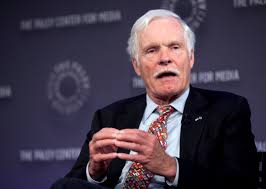

Ted Turner: How the CNN Founder Changed Global News Forever
When people search for ted turner cause of death or wonder did ted turner die, they’re often surprised to learn that Ted Turner is still alive and remains one of the most influential figures in media history. The confusion itself shows how legendary his legacy has become. Turner didn’t just build a television network—he reshaped how the entire world consumes news. As the creator of CNN, he introduced the revolutionary idea of a 24-hour news cycle, something that feels ordinary today but was unthinkable before 1980.
This is the story of how Ted Turner, an ambitious and unconventional entrepreneur, changed global journalism forever, challenged traditional media, and built an empire that redefined information in the modern age. His journey also intersects with Hollywood icon Jane Fonda, his former wife, adding another fascinating chapter to his public life.
The Bold Idea That Created the 24-Hour News Revolution
Before CNN existed, television news had strict limits. Viewers relied on morning newspapers and short evening bulletins to stay informed. News was scheduled, controlled, and limited. Ted Turner looked at this system and saw a massive gap. He believed people didn’t want news only at fixed hours—they wanted access to information anytime, especially during major global events. That belief led to the launch of CNN in 1980, a network many critics predicted would fail within months.
Turner faced skepticism from established media houses who mocked the concept of nonstop news. They believed there simply wasn’t enough happening in the world to justify 24 hours of coverage. Turner disagreed. He trusted that real-time reporting, live coverage, and immediate analysis would attract viewers in a way traditional news never could. He was right. When historic events like the Gulf War unfolded, CNN’s live reporting showed the power of constant coverage, and suddenly the world realized that news had entered a new era.
CNN didn’t just report events—it brought the world into living rooms as events happened. This shift permanently changed journalism standards. Competing networks were forced to adapt, and today nearly every major broadcaster operates on the 24-hour model Turner pioneered. Without Ted Turner’s vision, modern news consumption—from live updates to breaking alerts on phones—might look very different.
Ted Turner’s Business Genius, Controversies, and Public Life
Ted Turner was never a conventional businessman. His personality was bold, outspoken, and sometimes controversial. He built his empire starting from his father’s billboard advertising business and expanded into media with fearless ambition. Turner acquired struggling stations, turned them profitable, and eventually created a media powerhouse that included CNN, TBS, and TNT.
His leadership style was risky but visionary. He invested heavily in ideas others thought were impossible. Turner also believed strongly in global communication and environmental causes. He later became known for philanthropy, donating billions to the United Nations and environmental initiatives.
Turner’s marriage to Jane Fonda also kept him in the public spotlight. Their relationship blended Hollywood fame with media power, making them one of the most talked-about couples of the time. Though their marriage ended, both have spoken respectfully about each other, and Fonda has acknowledged Turner’s brilliance and complexity.
Despite his achievements, Turner faced criticism and controversy throughout his career. His outspoken nature sometimes led to public backlash, but he never backed down from expressing his opinions. This fearless attitude, while divisive, played a crucial role in his success. He wasn’t afraid to challenge norms, and that mindset allowed him to create something the world had never seen before.
The Legacy That Still Shapes Global Journalism Today
Today, when people Google phrases like ted turner died or ted turner cause of death, it highlights how deeply embedded his name is in media history. His impact is so significant that many assume his era has passed, when in reality, his influence is still alive in every newsroom across the globe.
The 24-hour news cycle, live reporting, global correspondents, and real-time crisis coverage all trace back to Turner’s original vision. News is no longer delayed or filtered through time constraints. It is immediate, dynamic, and constant. Social media, digital news platforms, and live streaming all follow the path Turner first carved out with CNN.
Turner also changed how media companies think about global audiences. CNN was never meant to be just an American channel—it was designed as a worldwide news platform. That global perspective is now standard journalism practice. News is reported with international viewers in mind, not just local audiences.
Even in discussions about modern misinformation and media responsibility, Turner’s original mission remains relevant: provide fast, reliable information to the public. His belief that people deserve access to continuous news reshaped the ethical and operational standards of journalism.
Why Ted Turner’s Impact Will Never Fade
Ted Turner didn’t just start a television network; he started a movement that transformed journalism forever. The way we consume news today—instantly, constantly, and globally—exists because one man dared to challenge the limits of traditional broadcasting.
From founding CNN to influencing global media standards, from his high-profile life with Jane Fonda to his philanthropic efforts, Turner’s story is one of bold vision and relentless determination. While many search for news about ted turner cause of death, the real story is about a living legend whose ideas continue to shape the world.
His legacy proves that sometimes, one disruptive idea is enough to change history. And in the case of Ted Turner, that idea was giving the world news without limits.