

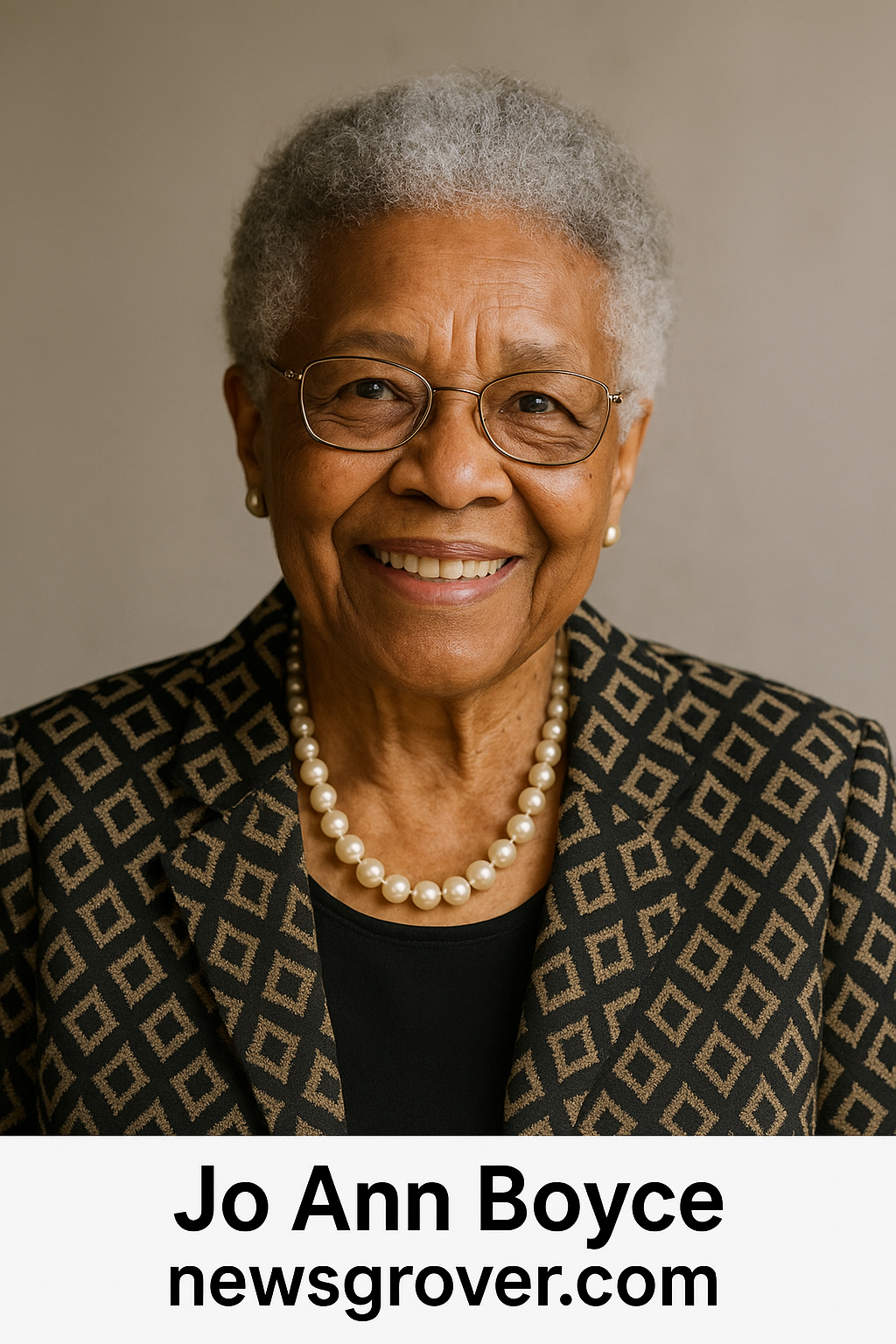

Jo Ann Boyce, a trailblazing civil rights icon who helped shatter the barriers of racial segregation in the American South as a teenager, has died. She was 84.
Boyce passed away peacefully on Wednesday at her home in Los Angeles, surrounded by family. Her daughter, Kamlyn Young, confirmed that the cause was pancreatic cancer.
Though her name may not be as instantly recognisable as the Little Rock Nine, Jo Ann Boyce (often searched for as Joanne Boyce) was a central figure in a pivotal, yet frequently overlooked, chapter of American history. As one of the “Clinton 12,” she was among the first group of African American students to integrate a public high school in the South following the Supreme Court’s landmark Brown v. Board of Education ruling. Her courage in the face of violent Ku Klux Klan mobs and systemic hatred paved the way for future generations, leaving an indelible mark on the fight for educational equality.
A Pioneer at Fourteen
Born Jo Ann Allen on September 15, 1941, in Clinton, Tennessee, Boyce grew up in a tight-knit African American community that, while vibrant, was strictly segregated from the white population. In 1956, a federal judge ordered Clinton High School to desegregate. At just 14 years old, Jo Ann was one of twelve Black students who lived within the school’s district and were suddenly thrust onto the front lines of the civil rights movement.
Unlike the meticulously planned integration of Little Rock Central High School, which would occur a year later in 1957, the integration of Clinton High was not orchestrated by national civil rights organisations. The “Clinton 12” were simply local teenagers who wanted an education. Jo Ann later recalled that she wasn’t trying to make history; she was just excited to attend a school with a library and a gymnasium—luxuries denied to her at the all-Black school she had previously attended, which required a long bus ride to Knoxville.
The days leading up to the first day of school were filled with a mix of anticipation and dread. Jo Ann’s grandmother, a seamstress, made her several new dresses for the occasion, ensuring she would look her best. “She was thinking about, ‘What clothes was I going to wear? How would I do my hair? Who were going to be my friends?” her daughter-in-law, Libby Boyce, recalled.
However, the innocence of those teenage concerns was quickly shattered.
Walking Through the Gauntlet
On August 27, 1956, Jo Ann and her eleven classmates made the “long walk” down Foley Hill from their neighbourhood to Clinton High School. Initially, the atmosphere was tense but relatively calm. But within days, the arrival of John Kasper, a white supremacist agitator from outside the community, turned the town into a powder keg.
Kasper rallied local segregationists and KKK members, whipping them into a violent frenzy. The twelve students were met daily by angry mobs screaming racial slurs, threatening their lives, and throwing rocks and rotten food. The violence escalated to the point where the National Guard had to be deployed to restore order—the first time such a measure was taken to enforce school desegregation in the South.
Despite the terror outside, Jo Ann displayed a remarkable poise that belied her young age. She became an informal spokesperson for the group, her calm demeanour and articulate nature capturing the attention of the press. Yet, the trauma was relentless. Inside the school, while some white students were welcoming or indifferent, others were cruel. Students would step on her heels in the hallway, shove her, or leave abusive notes in her locker.
“We walked with our heads held high,” Boyce would later tell audiences. “But inside, we were terrified.”
The Move West
The relentless violence and the toll it took on her family eventually became too much to bear. In December 1956, after months of enduring the hatred of her neighbours, Jo Ann’s family made the difficult decision to leave Clinton. They joined the Great Migration, packing their belongings and moving across the country to Los Angeles, California.
Leaving Clinton was bittersweet. Jo Ann felt a deep sense of responsibility to the movement and to her friends who stayed behind. Only two of the original Clinton 12 would remain to graduate from the high school. However, the move to California offered a chance for safety and a new beginning.
In Los Angeles, Jo Ann enrolled at Dorsey High School, where she flourished. The vibrant, multicultural atmosphere of the city was a stark contrast to the stifling oppression of the Jim Crow South. It was here that she began to explore her other passions, including music. For a brief period, she and her sister formed a singing group called “The Debs,” recording singles and performing locally.
A Life of Service and Healing
While her time in the spotlight as a singer was short-lived, her dedication to caring for others became a lifelong calling. Jo Ann pursued a career in nursing, eventually becoming a pediatric nurse. For over four decades, she worked tirelessly to comfort and heal sick children, a profession that perfectly suited her compassionate and resilient spirit.
Her colleagues and patients in Los Angeles often had no idea that the gentle nurse checking vitals was a civil rights pioneer who had once walked through mobs of segregationists. For many years, Jo Ann kept her story largely private, focusing on raising her three children—Victor, London, and Kamlyn—and building a life filled with love and family.
Reclaiming Her Story
It was not until her later years that Jo Ann Boyce began to share her history with the wider world. As the events of the civil rights era began to fade from living memory, she realised the importance of preserving the truth for future generations.
In 2019, she co-authored the book “This Promise of Change: One Girl’s Story in the Fight for School Equality” with Debbie Levy. Written in verse, the book chronicles her experiences in Clinton with a raw and lyrical power. It received critical acclaim, winning the Boston Globe-Horn Book Award for Nonfiction, and introduced the story of the Clinton 12 to a new generation of young readers.
Boyce spent her final years as an educator and advocate, travelling to schools and community centres to speak about her experiences. She captivated audiences with her warmth and honesty, emphasising not just the pain of the past, but the power of forgiveness and the necessity of standing up for what is right.
“She wanted to make sure that young people knew about it,” said Libby Boyce. “And her important message was not to hate, to bring love instead.”
A Legacy of Stardom and Strength
Jo Ann’s legacy also poignantly intersected with pop culture through her grandson, Cameron Boyce. A Disney Channel star known for his roles in Jessie and Descendants, Cameron idolised his grandmother. He frequently spoke about her influence on his life and her role in history. In a project for Black History Month, he proudly narrated her story, bridging the gap between his young fanbase and the civil rights movement.
Tragically, Cameron passed away in 2019 at the age of 20 due to complications from epilepsy. The loss was devastating for Jo Ann, yet she continued to honour his memory by supporting the Cameron Boyce Foundation and continuing the work they both cared about deeply.
Final Farewell
The death of Jo Ann Boyce marks the loss of a living link to a defining moment in American history. She is survived by her sister, Mamie Hubbard, her three children, and her grandchildren.
As news of her passing spreads, tributes are pouring in from historians, activists, and the many individuals she inspired. The Green McAdoo Cultural Centre in Clinton, which preserves the history of the integration crisis, released a statement honouring her “caring and humble soul.”







A truly inspiring story—it’s important to remember the courage of the Clinton 12 and pioneers like Jo Ann Boyce. I was reading about related historical contexts and found https://tinyfun.io/game/poor-bunny had some interesting background information as well.