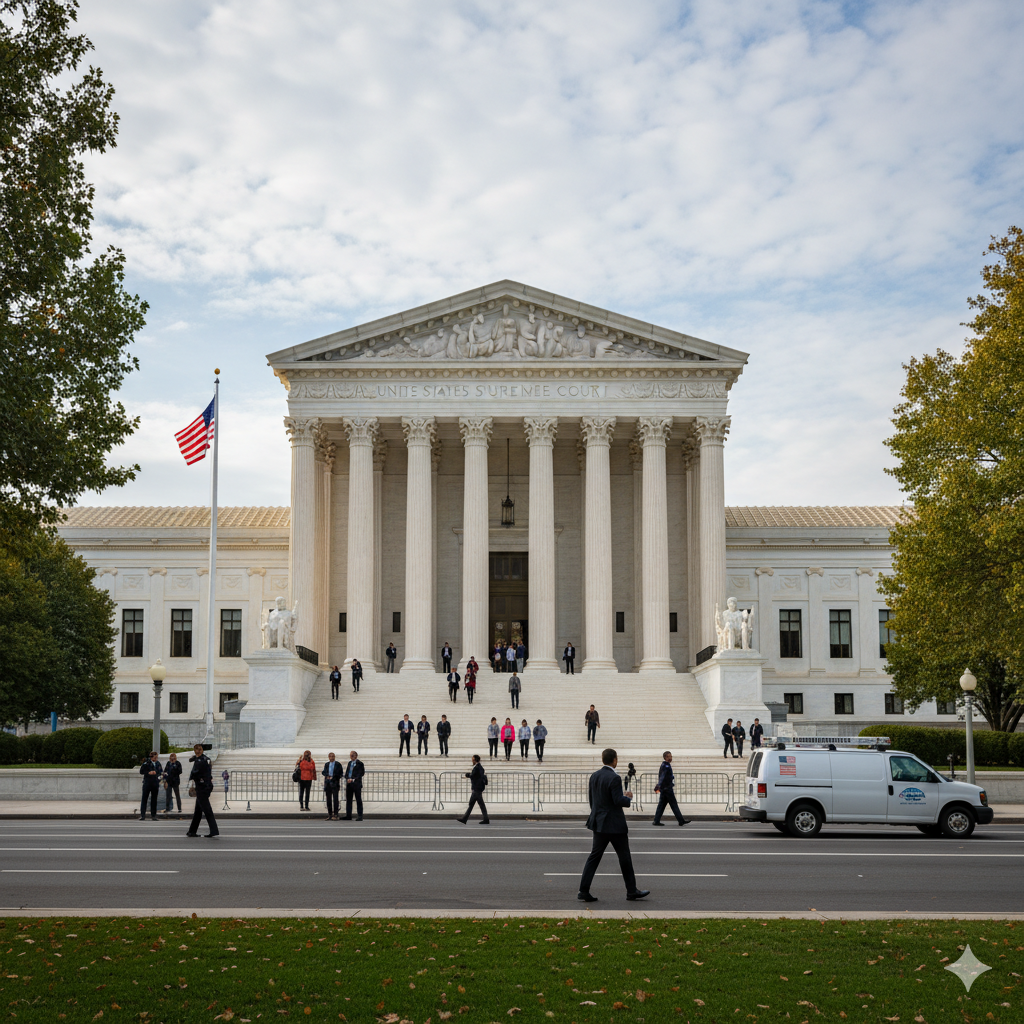

Gay Marriage at the Supreme Court? Justices Weigh Revisiting Landmark Issue

The landscape of LGBTQ+ rights in the United States has been shaped significantly by the Supreme Court, with the landmark 2015 decision in Obergefell v. Hodges legalizing same-sex marriage nationwide. This ruling, rooted in the 14th Amendment’s gay marriage protections, was celebrated as a monumental victory for equality. However, recent legal developments and dissenting opinions from some justices have raised questions about the stability of this precedent, prompting speculation about whether the Supreme Court’s gay marriage issue could be revisited. NewsGrover.com explores the arguments and potential implications of such a scenario.
The Obergefell decision was a culmination of decades of advocacy and legal battles. Before 2015, the legality of same-sex marriage varied wildly from state to state, creating a confusing and often discriminatory patchwork of laws. The Supreme Court, in a 5-4 decision, declared that the right to marry is a fundamental right inherent in the liberty of the person, and that the denial of this right to same-sex couples violated both the Due Process and Equal Protection Clauses of the Fourteenth Amendment. Justice Anthony Kennedy, writing for the majority, emphasized the dignity of marriage and its importance to individuals and society. The ruling mandated that all states must issue marriage licenses to same-sex couples and recognize same-sex marriages performed in other jurisdictions. This gay marriage case solidified the rights of countless couples and fundamentally altered the legal framework for LGBTQ+ marriage in America.
Despite the celebratory response from many, the Obergefell decision was not without its detractors, particularly among conservative legal scholars and some justices. Justice Antonin Scalia, in a scathing dissent, argued that the majority had overstepped its constitutional bounds by creating a new right not explicitly found in the Constitution. Justice Clarence Thomas and Justice Samuel Alito have also consistently expressed their view that Obergefell was wrongly decided, arguing that it infringed upon religious liberty and states’ rights. For years, these dissenting voices remained in the minority, and the precedent seemed firmly established.
However, the legal landscape has shifted in recent times, particularly with changes in the composition of the Supreme Court. The appointment of three conservative justices during the Trump administration has created a 6-3 conservative majority. This shift has led to a renewed focus on “originalism” and “textualism” in constitutional interpretation, approaches that tend to favor a narrower reading of constitutional rights and greater deference to states.
The most significant tremor came in June 2022, when the Supreme Court overturned Roe v. Wade, the nearly 50-year-old precedent establishing a constitutional right to abortion. In his concurring opinion in Dobbs v. Jackson Women’s Health Organization, Justice Thomas explicitly stated that the Court should “reconsider all of this Court’s substantive due process precedents, including Griswold, Lawrence, and Obergefell.” Griswold v. Connecticut established the right to contraception, and Lawrence v. Texas decriminalized same-sex sexual activity. Thomas’s statement sent shockwaves through the LGBTQ+ community and their allies, directly raising the specter of a challenge to the 2015 same-sex marriage case.
While Justice Thomas’s opinion was a concurrence and not the majority opinion in Dobbs, it nevertheless signaled a potential path for future challenges. The legal reasoning in Dobbs focused on the idea that a right must be “deeply rooted in this Nation’s history and tradition” to be considered a fundamental right protected by the Due Process Clause. Critics of Obergefell could attempt to apply this same logic, arguing that same-sex marriage does not have such a historical pedigree.
The question then becomes: how could a new gay marriage case reach the Supreme Court? One potential avenue would be through a state passing a law that directly challenges Obergefell, perhaps by defining marriage solely as between one man and one woman, or by refusing to recognize same-sex marriages performed in other states. Such a law would almost certainly be challenged in lower courts, and if it were upheld by a state supreme court, it could then be appealed to the U.S. Supreme Court. Another possibility could involve a religious liberty challenge, where an individual or institution argues that Obergefell infringes upon their religious freedom to discriminate against same-sex couples.
The potential implications of overturning Obergefell would be profound. It would not immediately invalidate existing same-sex marriages, but it would remove the federal protection for the right to marry, pushing the issue back to individual states. This could lead to a return to the pre-2015 patchwork of laws, where the legality of LGBTQ+ marriage would depend on where a couple lived. Couples who married in states where same-sex marriage remained legal might face difficulties having their marriages recognized in states that chose to outlaw it. This would create immense legal and emotional uncertainty for millions of families.
Furthermore, a reversal of Obergefell could have a ripple effect on other LGBTQ+ rights. If the Court were to dismantle rights based on the principle that they are not “deeply rooted in history,” it could open the door to challenges against other protections for the LGBTQ+ community. This underscores the anxiety within the community and among legal scholars about the current trajectory of the Court.
However, it is also important to note that overturning Obergefell would be a significant undertaking, even for the current conservative majority. The principle of stare decisis, which favors adherence to precedent, is a cornerstone of the legal system. While Dobbs demonstrated that stare decisis is not absolute, it is still a weighty consideration. Moreover, public opinion has shifted dramatically since 2015, with a majority of Americans now supporting same-sex marriage. Overturning such a widely accepted right could lead to significant public backlash and further erode the Court’s legitimacy.
For now, same-sex marriage remains the law of the land, a right secured by the 14th Amendment gay marriage ruling in the 2015 same-sex marriage case. However, the legal landscape is fluid, and the discussions among some justices and conservative legal groups suggest that the issue of the Supreme Court’s LGBTQ marriage is far from settled. The focus on the Supreme Court gay marriage debate highlights the ongoing struggle for equality and the vigilance required to protect established rights. NewsGrover.com will continue to monitor any developments that could bring this landmark issue back before the highest court case legalizing gay marriage in the nation.