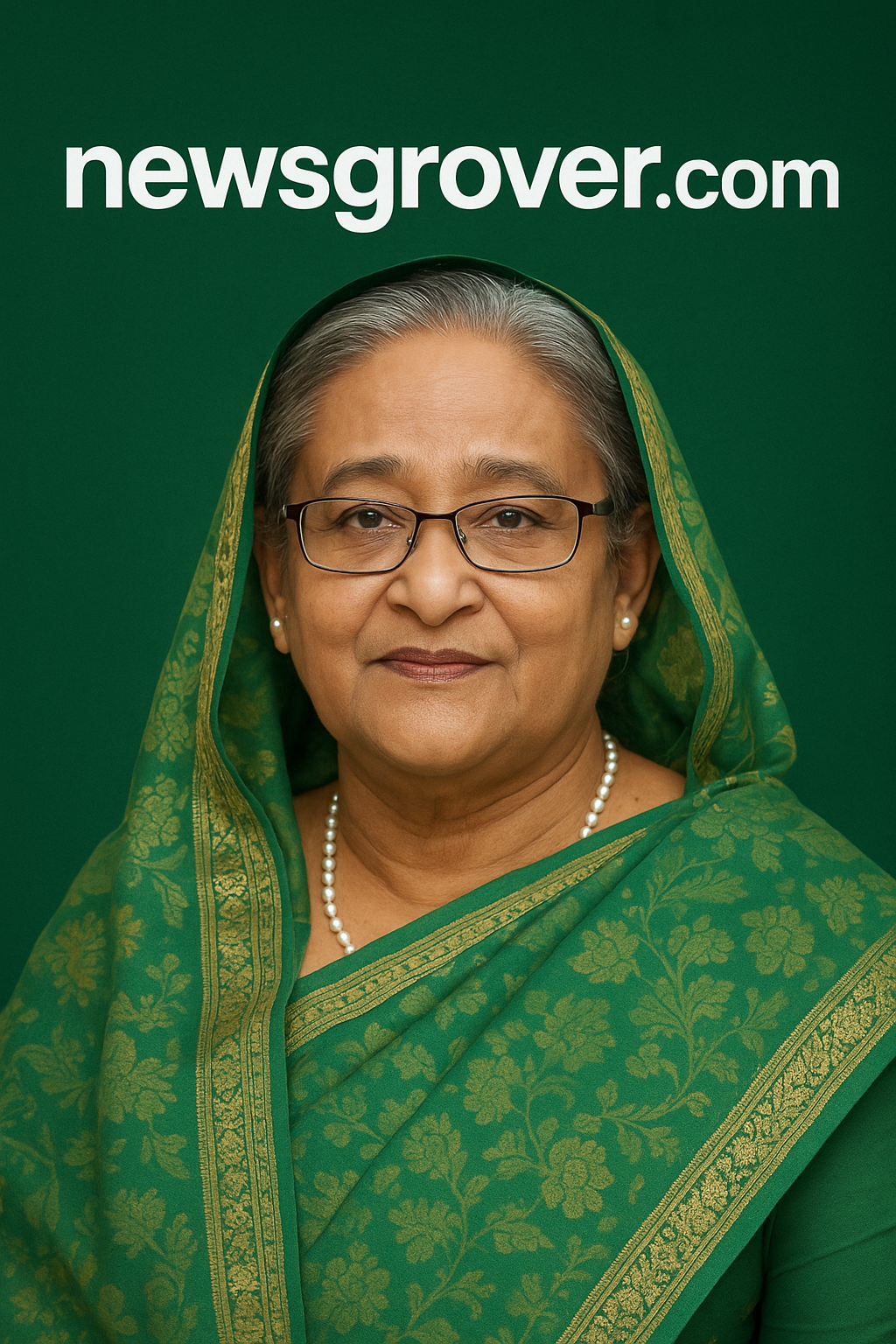

Bangladesh Tribunal to Deliver Verdict Against Sheikh Hasina
Published on Newsgrover.com
Bangladesh is witnessing a historic and highly charged moment as a special tribunal prepares to deliver its verdict in a case involving former Prime Minister Sheikh Hasina, a figure who has shaped the country’s political landscape for decades. The announcement of the impending verdict has sparked widespread debate, heightened political tensions, and brought renewed international attention to Bangladesh’s judicial and democratic institutions.
A Landmark Case in Modern Bangladeshi Politics
Sheikh Hasina served multiple terms as the Prime Minister of Bangladesh and is widely regarded as one of the most influential leaders in South Asia. Her tenure was marked by major economic expansion, large-scale infrastructure projects, and a strong focus on counterterrorism. However, her rule was also accompanied by allegations of authoritarian tendencies, suppression of opposition, and accusations of human rights violations.
The current case before the tribunal centers on corruption charges and alleged abuses of power during her time in office. The prosecution argues that Hasina misused her authority for political and financial gain, while her supporters claim the trial is a politically motivated attempt to dismantle her legacy and weaken her political party.
Political Tensions on the Rise
The announcement that the tribunal will deliver its verdict has intensified political divisions across the country. The ruling party and opposition groups are bracing themselves for what may be one of the most consequential judicial outcomes in recent years.
Supporters of Sheikh Hasina argue that she has been unfairly targeted by political rivals who seek to undermine her contributions to the nation. They insist that the charges lack credible evidence and that the tribunal has been influenced by political pressures. Meanwhile, critics maintain that the case is essential for accountability and justice, emphasizing that no individual, regardless of stature, should be above the law.
The tension has spilled into the streets, with rallies, marches, and counter-protests reported in major cities including Dhaka and Chittagong. Security forces have been deployed to maintain order as fears grow that the verdict could trigger widespread unrest.
International Response and Concerns
The international community is keeping a close watch on the tribunal’s proceedings. Several human rights organizations have expressed concerns about transparency, due process, and potential political interference. Diplomatic missions from the European Union, the United States, and various Asian countries have urged Bangladesh to ensure a fair and impartial judgment.
Global observers point out that Sheikh Hasina has long been a significant player in regional stability, particularly in matters related to counterterrorism, the Rohingya refugee crisis, and South Asian diplomacy. Therefore, the tribunal’s verdict is seen not only as a domestic issue but also as one that could affect regional dynamics.
A Legacy Under Threat
For many, Sheikh Hasina’s legacy is at stake. Her supporters highlight her achievements:
- Major infrastructure projects including bridges, highways, and power plants
- Transforming Bangladesh into one of the fastest-growing economies in Asia
- Expanding digital connectivity and modernizing public services
- Strengthening the fight against extremism and terrorism
However, her critics argue that these accomplishments came at the cost of democratic freedoms. Opponents accuse her government of silencing journalists, arresting opposition politicians, and manipulating state institutions.
The tribunal’s verdict will play a central role in how future generations remember Sheikh Hasina—either as a visionary leader or as a controversial figure whose leadership came with deep flaws.
Public Sentiment and Expectations
As the day of the verdict approaches, the public remains deeply divided. Many view the trial as a decisive moment for justice, transparency, and accountability. Others see it as part of a larger political struggle that has long defined Bangladeshi politics.
Social media discussions, public forums, and talk shows have all been dominated by speculation about the tribunal’s decision. “Whatever the verdict is, it will shape our politics for years,” one Dhaka-based analyst remarked.
Ordinary citizens, too, are anxious. Some fear that a harsh verdict could lead to political instability, while others worry that an acquittal could undermine confidence in the judiciary. Businesses, banks, and investors have also expressed concern, warning that prolonged instability could affect Bangladesh’s economic progress.
What Happens Next?
The tribunal is expected to deliver its verdict in the coming days, but what happens afterward remains uncertain. If found guilty, Sheikh Hasina could face significant legal consequences, ranging from a ban from politics to a lengthy prison sentence. Her party, supporters, and legal team are already preparing for potential appeals.
If acquitted, the political landscape may shift again, giving her supporters fresh momentum and possibly reshaping alliances.
A Turning Point for Bangladesh
No matter the tribunal’s decision, one thing is clear: this verdict marks a turning point. It will influence political identities, redefine power dynamics, and potentially chart a new course for Bangladesh’s future. As the world watches closely, the nation stands at a crossroads, waiting for a judgment that carries immense historical significance.