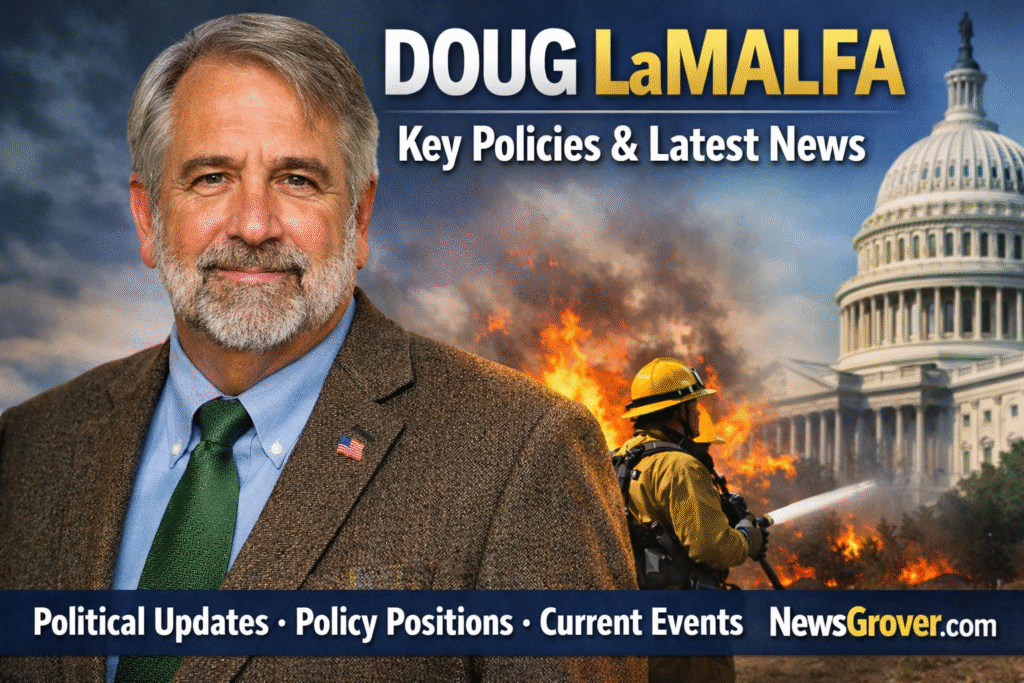

When it comes to long-serving conservative voices in Congress, Doug LaMalfa is a name that frequently stands out—especially across California’s North State region. Known for his straightforward communication style, agriculture-focused priorities, and consistent conservative voting record, he remains one of the most influential political figures representing rural communities.
If you follow American politics, farm policy, or wildfire and water-management issues, understanding his career and where he stands today is essential. This detailed guide covers his political background, top policy positions, and the latest updates shaping his work in Washington.
Doug LaMalfa’s Political Journey — From Farmer to Influential Congressman
Doug LaMalfa’s political story is rooted deeply in agriculture and family farming. Before stepping into national politics, he spent years involved in his family’s rice-farming business in rural Northern California. That firsthand experience with land, water, and crop regulations played a major role in shaping his political identity.
He began his political career at the state level, serving in the California State Assembly and later the State Senate. His strong stance against excessive regulations, high taxes, and government overreach helped him build a loyal voter base. Those early roles set the stage for his entry into the U.S. House of Representatives, where he continues to represent California’s 1st Congressional District.
As a member of Congress, he’s built a reputation as a reliable advocate for agricultural communities, rural businesses, and conservative values. His political approach centers around practical solutions that support farmers, landowners, and small-town residents.
Major Policy Positions That Define His Work in Congress
Doug LaMalfa’s policy priorities are heavily influenced by the challenges rural Californians face every year—wildfires, water shortages, rising living costs, and complicated federal regulations. His legislative focus often reflects these issues.
Agriculture & Farm Policy
Agriculture is the backbone of his policy agenda. He has consistently pushed for:
- Fair Farm Bill provisions
- Water access for growers
- Reduced regulatory pressure on farmers
- Expansion of agricultural insurance and disaster relief
His background in farming gives him credibility with the agricultural community, making him a strong voice on issues like irrigation, crop protection, and farm-to-market logistics.
Water Resources & Drought Management
Water is one of the biggest political challenges in California. LaMalfa regularly supports legislation aimed at:
- Increasing water storage
- Improving water delivery systems
- Prioritizing rural water needs over bureaucratic delays
- Fast-tracking infrastructure that helps fight drought conditions
Whether it’s funding dams or reducing regulatory hurdles, water security remains one of his top priorities.
Wildfire Prevention & Forest Management
Northern California is no stranger to devastating wildfires. That’s why he often advocates for:
- Improved forest thinning
- More controlled burns
- Faster federal response
- Straightforward land-management policies
He argues that outdated environmental rules often slow down vital forest work, worsening the wildfire crisis. His wildfire legislation typically focuses on risk reduction and long-term forest health.
Transportation, Infrastructure & Rural Development
Rural communities frequently struggle to secure federal funding for roads, broadband, and public services. LaMalfa supports programs designed to:
- Improve rural transportation networks
- Expand high-speed internet
- Strengthen local infrastructure
- Support small-town economies
His focus on infrastructure aims to ensure rural residents get equal access to modern services.
The Latest News Surrounding Doug LaMalfa
Recent news cycles have highlighted LaMalfa’s involvement in several key national and state issues. Whether it’s federal spending debates, wildfire response strategies, or agricultural reforms, he frequently takes strong positions that gain media attention.
Some recent areas where he has been particularly active include:
- Pushing for improved federal disaster relief for wildfire-affected communities
- Opposing policies, he believes, increase government spending without accountability
- Supporting legislation that benefits farmers facing rising costs and economic challenges
- Speaking out on issues like border security, rural energy needs, and small-business taxation
LaMalfa also continues to attend local town halls, community events, and agricultural meetings to stay connected with residents. His grassroots approach enables him to maintain strong support across the region, even in heated political environments.
Why Doug LaMalfa Remains a Significant Political Figure
Doug LaMalfa’s influence comes from his combination of strong conservative principles and a practical understanding of rural issues. Unlike many national lawmakers, he represents an area where farming, forestry, and land use are daily realities—not distant policy topics.
Some reasons he continues to matter in American politics include:
- Consistency: His voting record strongly aligns with the values of his district.
- Experience: With years in both state and federal government, he brings institutional knowledge to critical committees.
- Community Focus: His direct connection to local industries keeps his work grounded.
- Advocacy for Rural America: He highlights issues that often go overlooked in national conversations.
Whether you agree with his political stance or not, his impact on agricultural, environmental, and economic policies is undeniable.
Understanding Doug LaMalfa’s Ongoing Role in U.S. Politics
From his roots as a Northern California farmer to his current position in Congress, Doug LaMalfa continues to shape the political landscape for rural communities. His policies reflect strong commitments to agriculture, wildfire prevention, water management, and conservative values. As national debates around these issues intensify, his stance—and votes—remain important for anyone following U.S. policy.
Staying updated on his work helps voters, farmers, business owners, and political observers better understand the decisions affecting Northern California and beyond.