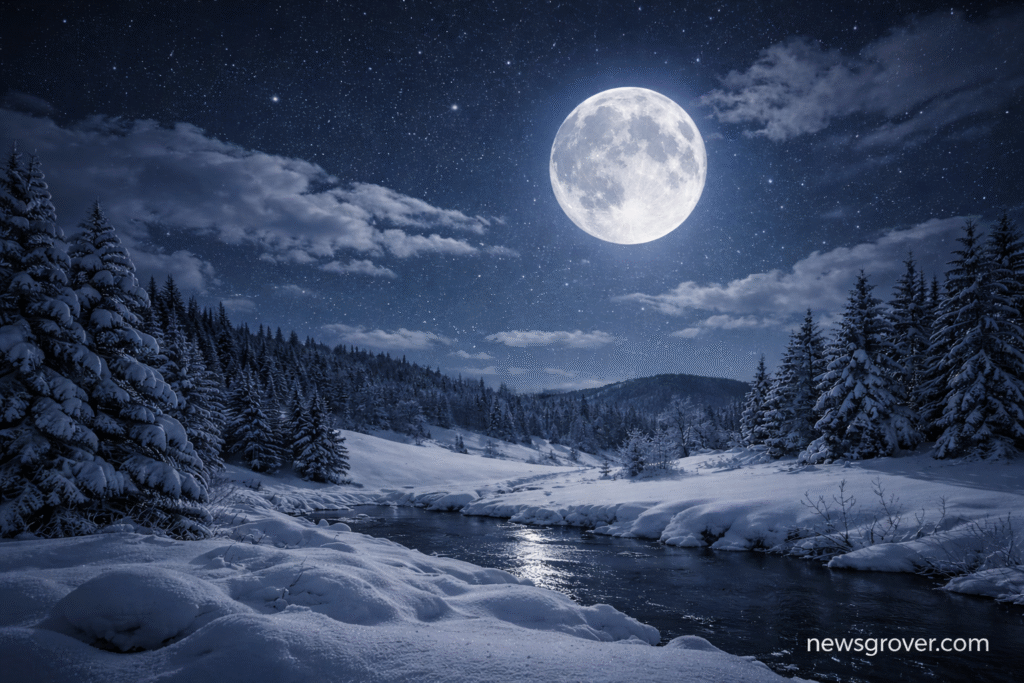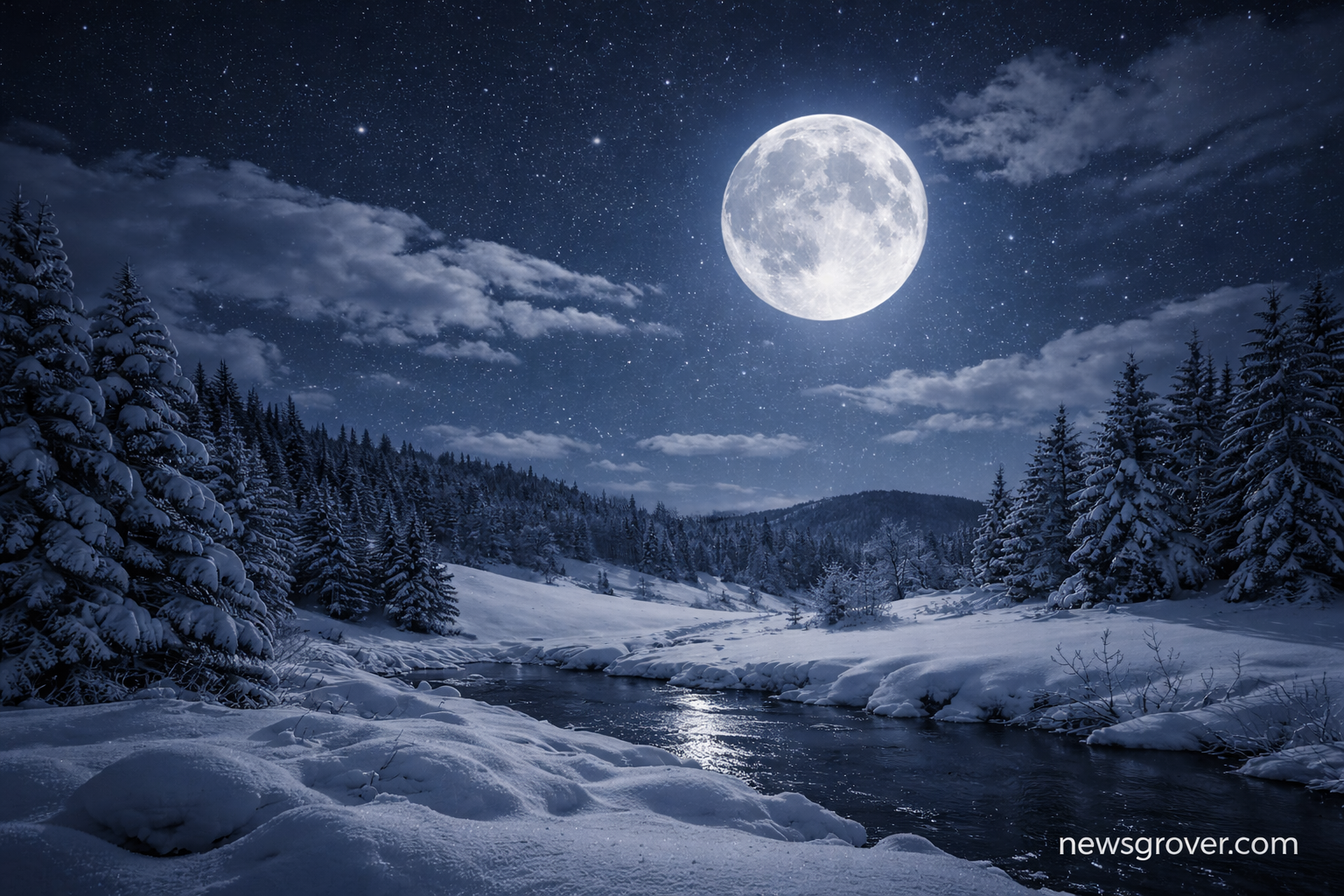

Every year, the first full moon of January captures the attention of skywatchers across the world. Known for its mysterious glow and deep cultural roots, this lunar event marks a powerful beginning to the year. The wolf moon is not just a visual treat—it carries historical meaning, seasonal significance, and a sense of wonder that has fascinated humans for centuries. Whether you are an astronomy lover or simply enjoy natural spectacles, this moon is worth stepping outside for.
In this guide, we’ll explore what makes this full moon special, when you can see it, and how to enjoy the best possible view without any special equipment.
What Is the Wolf Moon and Why Is It Called That?
The January full moon gets its name from ancient traditions, particularly from Native American and early European cultures. During the coldest and darkest nights of winter, wolves were often heard howling outside villages, searching for food. Over time, this haunting sound became associated with the first full moon of the year, giving rise to its iconic name.
Beyond folklore, this moon represents survival, endurance, and renewal. Historically, January was a challenging month, and the bright full moon provided light during long winter nights. Today, the meaning has evolved, but the symbolism remains strong. Many people see this moon as a reminder to reflect, reset goals, and prepare for the months ahead. Astronomically speaking, it’s a standard full moon, but culturally and emotionally, it carries a deeper impact that continues to resonate in modern times.
Wolf Moon Date, Timing, and Astronomical Highlights
The timing of this lunar event varies slightly each year, usually occurring in early to mid-January. On rare occasions, the calendar can even feature 2 wolf moon phases within a short span, depending on lunar cycles and time zones. When this happens, it creates extra excitement among astronomers and sky enthusiasts.
This full moon often appears larger and brighter when it rises near the horizon, an effect known as the “moon illusion.” Cold winter air also tends to be clearer and drier, which can improve visibility and make the moon look sharper in the night sky. While it doesn’t require a telescope to enjoy, binoculars can reveal surface details like craters and lunar plains, adding to the experience.
Checking local moonrise times is important, as viewing conditions can change depending on your location. Clear skies and minimal light pollution will always offer the best results.
Best Viewing Tips for a Perfect Wolf Moon Experience
You don’t need expensive gear or expert knowledge to enjoy this celestial event—just a little planning. Start by finding a spot away from city lights, such as a park, open field, or rooftop with a clear view of the horizon. Dress warmly, as January nights can be extremely cold, and bring a hot drink to make the experience more comfortable.
Photography enthusiasts should use a tripod to avoid motion blur and experiment with lower ISO settings to capture details. Even smartphone cameras can produce impressive results when stabilized properly. If you’re watching with family or friends, take a few moments to simply observe without distractions. The calmness of the winter night combined with the glowing moon creates a peaceful atmosphere that’s easy to appreciate.
For an even richer experience, pair your viewing with a moon calendar app or astronomy guide to track lunar phases and learn more about what you’re seeing in real time.
Why the Wolf Moon Still Matters Today
In a fast-paced digital world, moments like this encourage us to slow down and reconnect with nature. The wolf moon serves as a reminder that even in the coldest, quietest months, there is beauty above us. It’s a shared global experience—people across different cultures and regions look up at the same moon, feeling the same sense of curiosity and awe.
Whether you view it as a scientific event, a cultural symbol, or a moment of personal reflection, this full moon continues to hold relevance. It bridges ancient traditions with modern appreciation, proving that some natural wonders never lose their impact.